Consultation
Parents are helped to understand their child's intellectual and emotional profile, and how to support their learning at home and at school.
Home/Programmes/Special programmes
An individually administered WISC-V intelligence test for children aged 6 to 16, conducted one-to-one by an accredited child psychologist specialising in gifted education.
One-to-one assessment · Ages 6 – 16 · 1.5 to 2 hours · 8-page written report
The testing is based on the WISC-V — the Wechsler Intelligence Scale for Children, Fifth Edition — an individually administered intelligence test for children aged 6 to 16.
It is a one-to-one session with Dr Sandhu, a certified psychologist (PhD, University of Cambridge) specialising in gifted education. Your child takes a series of verbal and written tests under her observation and supervision, and can take a break at any time (apart from the timed tests).
Depending on how your child performs, she administers 7 to 10 primary subtests. Only 7 are required for a full-scale IQ score; she usually runs all 10, because the extra subtests give a fuller picture of your child's intellectual profile.
You receive an 8-page written report with the scores set out and explained: a Composite Score (from 7 of the 10 primary subtests) representing your child's overall intellectual ability (FSIQ); the 5 Primary Index Scores — Verbal Comprehension (VCI), Visual-Spatial (VSI), Fluid Reasoning (FRI), Working Memory (WMI) and Processing Speed (PSI); and 3 of the 5 Ancillary Index Scores, including Quantitative Reasoning (QRI), Auditory Working Memory (AWMI), Nonverbal (NVI), General Ability (GAI) and Cognitive Proficiency (CPI).
The report describes your child's cognitive strengths and areas for development, with recommendations based on the results.
Most parents arrive with one of three questions in mind:
Knowing your child's cognitive profile beforehand shows where the strengths are and where support helps most.
Bright children often develop unevenly — advanced intellectually, while emotionally and socially at their own age. An assessment describes the whole child.
Some children are both gifted and have learning differences such as dyslexia, ADHD or processing difficulties — a profile school assessments rarely identify.
Dr Sandhu holds a PhD in Psychology (Gifted Education) from the University of Cambridge, UK, and is an accredited child psychologist and assessor who conducts internationally recognised IQ assessments. She has worked with high-ability learners since 1996, and has taught at the University of Cambridge, University Putra Malaysia (UPM) and Singapore University of Social Sciences (SUSS).
She has served in institutions worldwide in her field: a former Vice-President and current Advisor of the National Association for Gifted Children, Malaysia (NAGCM), with work alongside V-Campus (affiliated with Stanford University's Education Program for Gifted Youth), Cambridge Alliance Centre, iGenius Singapore, and as a school psychologist at Raffles Girls' Secondary School, Singapore.
At present she leads a consultancy providing assessment and advisory services to parents, students, schools and organisations in giftedness, critical thinking, creativity and positive psychology.
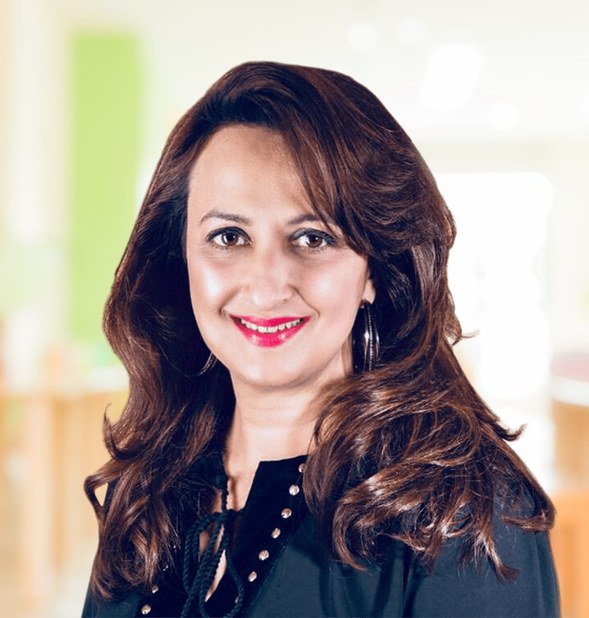
Besides administering the WISC-V, Dr Sandhu offers assessment, advice and counselling for bright children and their families.
Parents are helped to understand their child's intellectual and emotional profile, and how to support their learning at home and at school.
Individual and family counselling on social, emotional and educational issues, with advocacy support with schools where needed.
Counselling for individuals, families and students, not limited to gifted children.
An IQ assessment does not label your child — it shows how they think, learn and process the world, so you can support them with clarity. Assessments are one-to-one at Joyous Learning, Toa Payoh.