


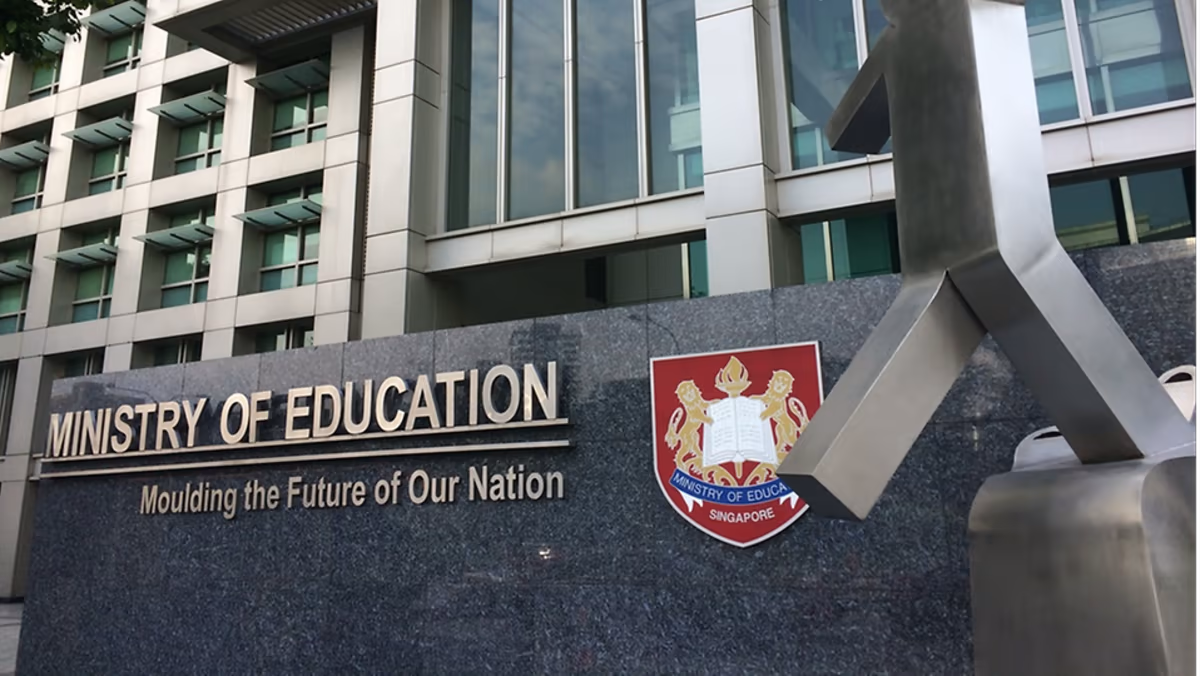
Examining MOE’s Criticisms of Tuition Centres: A Balanced Perspective
The Ministry of Education (MOE) in Singapore has recently reiterated its concerns about the proliferation and practices of tuition and enrichment centres. While MOE’s intentions are to safeguard student well-being and promote equitable access to education, it is important to critically assess these criticisms in light of the realities faced by students, parents, and educators.
This article addresses the key points raised by MOE, referencing expert opinions, forum discussions, and independent observations, while also considering how centres like us complement the education ec0-system.
MOE Criticism #1: Tuition Centres Exploit Parental Anxiety
MOE has expressed concern that some tuition centres use aggressive marketing and fear-based tactics to pressure parents into enrolling their children. The ministry likens this to exploitative advertising seen in other industries, warning that such practices can create unnecessary anxiety and a sense of “missing out” among families.
Counterpoint: Parents are educated and discerning. Parental Demand Is Driven by Systemic Needs
Parents today are educated and discerning, and are especially well-informed about their child’s educational needs. While there are examples of questionable marketing in the industry, the widespread demand for tuition is more deeply rooted in systemic factors.
Many parents on local forums and in expert commentaries highlight large classroom sizes in mainstream schools—often 40 or more in primary and 35 in secondary—which make individual attention challenging.
Tuition centres respond to this gap by offering smaller groups and personalised support, a service many families actively seek out rather than being coerced into. In the case of Joyous Learning, class sizes are capped at nine, allowing for tailored instruction and meaningful teacher-student engagement.
MOE Criticism #2: Tuition Centres Foster Unhealthy Competition and Stress
MOE contends that tuition centres fuel a culture of competition and stress, especially by targeting very young students. The ministry argues that schools are sufficiently equipped to support students without external intervention.
Counterpoint: Tuition Centres Can Reduce Stress Through Personalisation
Contrary to the narrative of heightened competition, many parents and students report that smaller class sizes and customised learning plans at tuition centres actually reduce stress. With fewer students per class, teachers can identify and address individual learning gaps, helping students build confidence and mastery at their own pace.
This is a stark contrast to the “one size fits all” approach that can be inevitable in larger classrooms setting in schools. For many, tuition is not about outpacing peers, but about catching up and feeling supported.
MOE Criticism #3: Tuition Centres Only Admit Top Students and Take Credit for Their Success
MOE has criticised some centres for selectively admitting high-performing students and then attributing these students’ achievements to their programmes.
Counterpoint: The Systemic Divide Begins with the PSLE and School Admissions
A key factor often overlooked in this criticism is the role of the MOE’s own system, particularly the Primary School Leaving Examination (PSLE), in creating academic divides. The PSLE is a high-stakes national exam that determines secondary school placement.
Admission to top secondary schools is governed by cut-off points (COPs) that fluctuate yearly and are often extremely competitive—especially for elite and Integrated Programme (IP) schools, where COPs can be as low as 4 to 7.
This system, by design, sorts students into different educational tracks, reinforcing distinctions between “top” and “neighbourhood” schools.
Research and expert opinion suggest that this meritocratic approach, while intended to reward ability, can exacerbate educational inequality. Students from higher socio-economic backgrounds often have more resources—such as access to tuition—to help them excel in the PSLE and gain entry to selective schools.
Thus, the divide is not solely the result of tuition centre practices, but a structural feature of the education system itself.
Save for the very few, tuition centres in Singapore are more democratic as they welcome students of all background and academic standings.
MOE Criticism #4: Schools Are Sufficient; Tuition Is Unnecessary
MOE maintains that with the current pupil-teacher ratio (PTR), schools have the capacity to support all students adequately, making external tuition unnecessary.
Counterpoint: Classroom Size and Individual Attention Remain Key Issues
While PTRs may look favourable on paper, actual classroom sizes remain large, limiting the amount of individual attention teachers can provide. In practice, many students—especially those who struggle or need enrichment—do not receive the targeted support they require in a class of 35 to 40 peers.
Tuition centres like address this by maintaining smaller class sizes and offering differentiated instruction, which many parents and students find invaluable.
Conclusion: The Role of Tuition Centres in Singapore’s Education Ecosystem
MOE’s concerns about the tuition industry are not without merit, particularly regarding unethical marketing and the potential for increased stress.
However, a closer examination reveals that the demand for tuition is largely a response to systemic features of Singapore’s education system—such as large class sizes and the high-stakes nature of the PSLE, which itself creates and perpetuates academic divides.
Tuition centres that prioritise ethical practices, inclusivity, and personalised learning—like Joyous Learning—play a constructive role by filling gaps that mainstream schools, due to structural constraints, cannot always address.
Rather than being a source of unnecessary pressure, these centres can provide much-needed support, especially for students who might otherwise fall through the cracks.
Ultimately, meaningful reform requires a holistic view of the entire education ecosystem, recognising both the strengths and limitations of schools and tuition centres alike.

At Joyous Learning, we hear you. We understand how frustrating it can be to feel like you’re pouring time and money into tuition with little to show for it. That’s why we’ve built a centre that focuses not just on academic results but also on easing parents’ concerns.
Here’s what makes us stand out:
- Passionate, Stable Tutors: Our team consists of experienced educators who love what they do. Plus, our low tutor turnover ensures consistency for your child.
- Clear Communication: We keep you in the loop with regular updates on your child’s progress, so you’re never left guessing.
- Personalized Learning: Every child is unique. We tailor our lessons to your child’s strengths, challenges, and learning style.
- Proven Track Record: Our students consistently show improvement—not just in grades but also in confidence and critical thinking.
- Stress-Free Scheduling: We design our programs to fit seamlessly into your family’s busy life.
- A Joyful Approach: Learning shouldn’t feel like a chore. We make lessons interactive, engaging, and enjoyable, so your child looks forward to tuition.
When you join Joyous Learning, you’re not just signing up for tuition—you’re giving your child a positive, life-changing learning experience.
Take the First Step Towards Stress-Free Tuition
If you’re frustrated with your current tuition arrangements or worried your child isn’t getting the support they need, it’s time to make a change.
At Joyous Learning, we take the stress out of tuition for parents while inspiring students’ curiosity, confidence, and joy. Let us help your child reach their full potential—and give you the peace of mind you deserve.
Because learning should be joyful—for your child and for you.
🎁 Sign Up for a FREE Trial Class Now!
📱 WhatsApp us at 89051533 or 🌐 Book here: Joyous Trial Class .
🎓 Joyous Learning: Small Class, First Class